Personal Voices, Shared History: Inside UH Libraries’ New Exhibit
A new exhibit at University of Houston Libraries features local primary sources curated from the LGBT History Research Collection.
“We the People: Exploring the American Experience through the UH Libraries LGBT History Research Collection” illuminates lived experiences represented by photos, handwritten letters, artwork, newspaper clippings, clothing, and ephemera. Presented with support from The Hollyfield Foundation, the exhibit offers visitors a unique opportunity to experience deeply individual yet publicly resonant perspectives from the 1940s to 2000s.
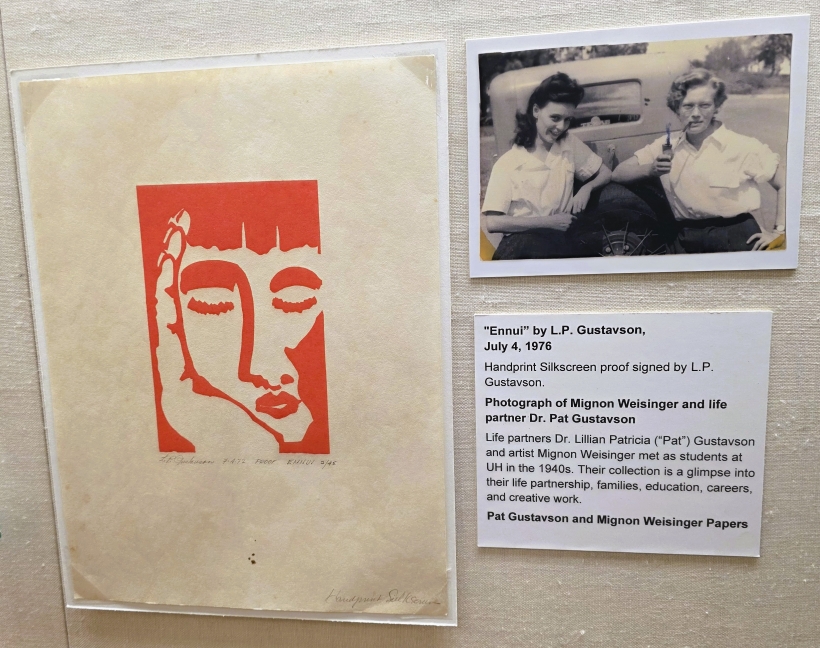
Artwork and a photo from the Pat Gustavson and Mignon Weisinger Papers
After thoughtful research and planning, archivist Joyce Gabiola selected rare, one-of-a-kind materials documenting extraordinary moments and milieus in Houston and LGBT history.
“As a UH alum and professional archivist who grew up in Houston, it’s an honor and privilege to have developed the exhibit for the UH community and public,” Gabiola said. “It’s also personally meaningful. One of my favorite parts of the exhibit is the inclusion of recent UH graduates’ affective engagement with materials in the collection, which represent academic and creative possibilities of archival research.”
Some of the collections featured in the exhibit are the Botts Collection of LGBT History, Diana Foundation Records, Arden Eversmeyer Papers, Fundación Latinoamericana de Acción Social Records, Gulf Coast Archive and Museum of GLBT History, and PFLAG Houston Records.
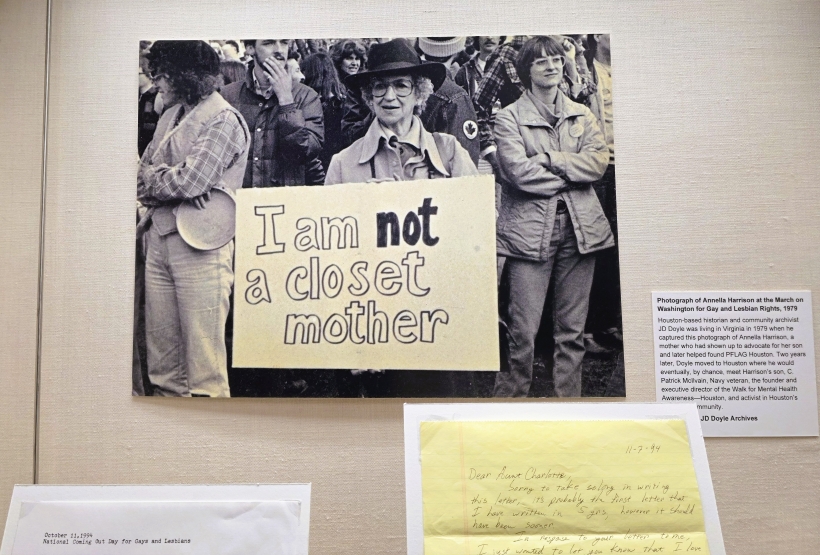
Photo from the JD Doyle Archives; correspondence from the Arden Eversmeyer Papers
UH Libraries has one of the most significant LGBTQ research collections in the country, built through decades of scholarly collaboration with members of the local community,” said Christian Kelleher, director of exhibitions and external relations. “While the exhibit only has room for a small sampling of materials from the extensive collections, it captures a sense of the personal and public, the civic, social and cultural historical primary sources represented in the archives.”
Curatorial assistant Lysandra Cruz stated that materials from the C. Patrick McIlvain Papers were especially notable for her. “It was a physical showcase of the kinds of emotions a person could go through,” Cruz said. Connected to Special Collections for a capstone course, she was motivated despite limited prior experience with physical primary sources. “What brought me to do this archival work was my want to learn more and experience a part of history that I felt also belonged to me,” she said.
Any UH student scholar, or member of the public who may be interested in exploring research collections can start with a finding aid search and connect with UH librarians and archivists who oversee the collections.
“We the People” is on view through December 2026 and is located at MD Anderson Library floor 1. For more information or to discuss possible instruction opportunities connected to the exhibit, contact Joyce Gabiola.
Important Notice: Bicycles and Scooters Prohibited in MD Anderson Library
 To support a safe and accessible environment for all Library visitors, bicycles and electric scooters are no longer permitted inside the MD Anderson Library, effective April 6, 2026. As stated in MAPP 09.04.02, bicycles and scooters are not allowed inside buildings; and reckless or negligent operation of all bicycles and scooters (motorized or otherwise) on any part of campus is prohibited.
This change is being implemented to:
- Reduce safety hazards in high‑traffic areas
- Prevent damage to Library facilities
- Ensure clear walkways and emergency access routes for all visitors
What this means for you:
Bicycles and electric scooters may not be brought, ridden, charged, or stored anywhere inside the Library. Students, staff, faculty, and visitors are encouraged to secure or park bicycles and scooters at designated outdoor racks before entering.
We appreciate your cooperation in keeping our shared spaces safe, welcoming, and conducive to study and research. If you need accommodations related to mobility, please contact the Justin Dart, Jr. Student Accessibility Center.
Thank you for helping us maintain a safe and accessible environment for everyone.
New Open Textbook Available: A Journey Through eLearning Design
A faculty member in the University of Houston Cullen College of Engineering recently published a new open educational resource (OER) with the support of UH Libraries Open Education Services.
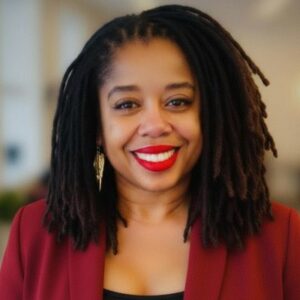
Dr. Tasha Bennett
Dr. Tasha Bennett, Lecturer in Human Development and Consumer Sciences, participated in the OER Creation Program with UH Libraries, an incentive program that supported faculty in developing high-quality course materials that are free to access, share, and customize. The program provided professional development and financial support for faculty to develop new OER that would be used as required course material in a UH course or program, and that would fill a gap in existing OER content.
Bennett successfully completed a year-long professional development program facilitated by the Rebus Foundation, which provided training for OER project scoping, content creation, review, and editing. After completing the program, Bennett developed and organized the content for the book, then formatted and published the completed OER on Pressbooks, a publishing platform provided by UH Libraries for open course materials.
Reflecting on her experience, Bennett noted that the structure and support provided helped her move the open textbook project from concept to completion. “It not only supports the development of high-quality open textbooks but also empowers faculty to rethink how learning resources can be designed to better serve our students,” Bennett said.
The open textbook, A Journey Through eLearning Design: From Idea to Impact, was published on UH Libraries Pressbooks in December 2025. It was designed to support two undergraduate Human Resources Development courses, Instructional Design for Human Resources Development and Designing eLearning Applications, both required for students majoring in the program.
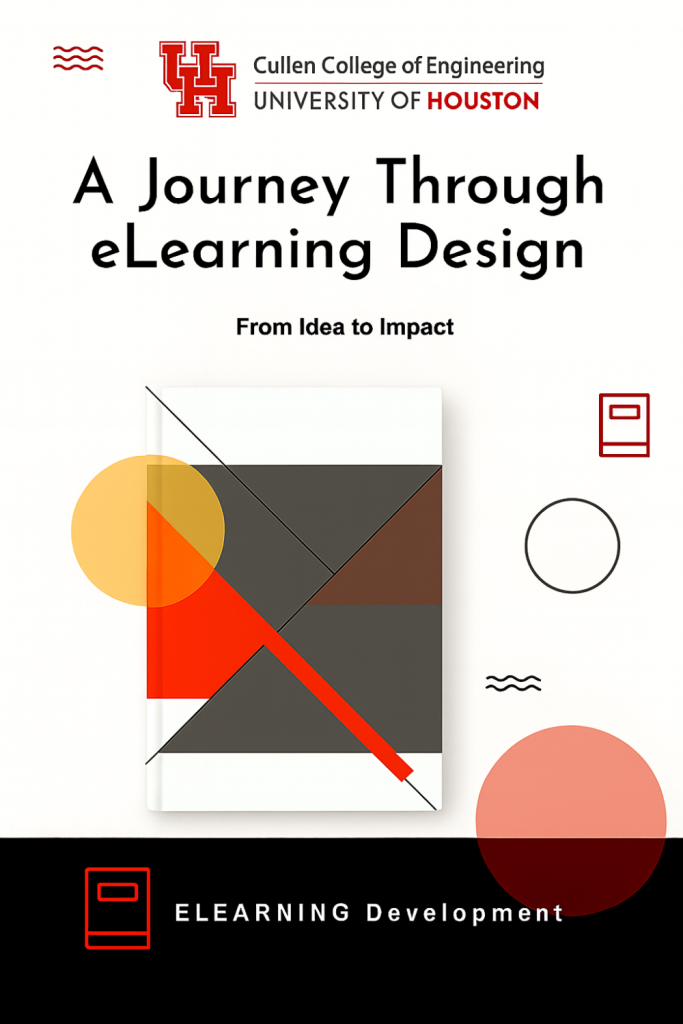
A Journey Through eLearning Design: From Idea to Impact
The textbook equips emerging creators with skills and strategies to design digital learning experiences that will engage learners in modern classroom settings. Covering a variety of foundational topics like learning design models and dimensions of learner engagement, in addition to emerging technologies like AI, the book will help students understand how they can design learning experiences intentionally to maximize their impact.
The resource is available under a Creative Commons Attribution-ShareAlike license, allowing other instructors to reuse, adapt, and redistribute customized versions that meet their specific teaching and learning needs.
“This OER will have a huge impact on the students who will be using it, not only because it’s free of cost, but it is a unique, custom resource that is tailored to Dr. Bennett’s courses,” said Kate McNally Carter, Coordinator of Open Education Services. “I am excited to see how she will be able to build upon this resource as she continues to teach with it. Additionally, it will also benefit the broader OER community by serving as an exceptional resource for instructional design education.”
In addition to structure and support, the OER Creation Program offered flexibility and emphasized faculty ownership and agency over the materials they were developing. “I appreciated the autonomy of designing a resource that aligned closely with my teaching philosophy and the specific needs of my students,” Bennett said. This enabled Bennett to center the OER around her curriculum, providing targeted training for in-demand skills that will better prepare UH students for the training and development industry.
To learn more about creating OER, contact Open Education Services by emailing [email protected].
New Library Manager
University of Houston Libraries is pleased to welcome Allison Young as the new library manager in Special Collections.
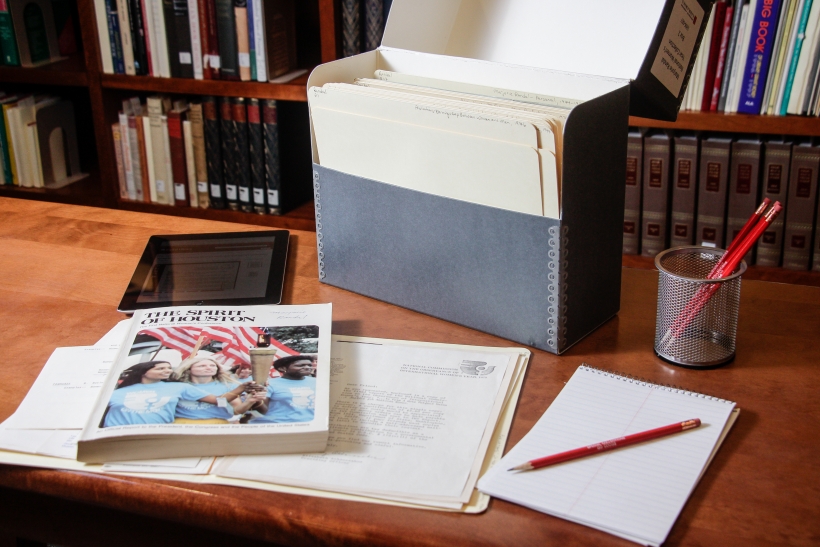
Special Collections Reading Room
Please describe your role. How does your work align with the student success and research impact focus of the University?
My role as Library Manager is directly involved with student success. I oversee our student employee pool in daily operations and patron service. I also assign students to archival projects that align with their academic and personal interests, which fosters a more rewarding work experience. Our students thus gain invaluable insight into archival research and processing.
I am also responsible for fielding research requests, making me a direct line of communication between potential patrons and our services. I thus not only assist former and future patrons in finding relevant materials, but I also schedule their appointments and put them in contact with curators of relevant collections. I further assist researchers at our reference desk when they visit our Reading Room.
Please share a bit about your background and professional interests. How do these inspire and shape your approach in Special Collections?
I received my BA in Art History with a minor in Anthropology and my MA in Art History from the University of Houston. My academic interests are reflections of my personal passions for the arts and humanities. The investigation of human history and creativity has always led me to libraries and museums. As such, I was extremely excited when I landed a student worker position at Special Collections. As a student worker, I was exposed daily to intimate materials reflecting parts of local, national, and international history. Excited and motivated by new skills in archival research, I translated my experience into my thesis work by visiting Special Collections and other institutions as a patron. These skills I continue to sharpen have colored the determination I bring to my new position at Special Collections daily.
What are one or two things you’d like scholars and students to know about engaging with primary source materials?
Researching primary source materials can be like an archeological dig in the archives, you never know what you will uncover. What can be found can move your research forward or stop it dead in its tracks. It can also humanize your perceptions on a person, people, and/or history. From personal experience, I have found glimpses into people’s lives–anywhere from centuries to a few years ago–that have made me laugh, made my heart ache, made me empathize. Primary sources are intellectual and emotional tools that, I believe, should not be underestimated.
Preserving Our Story, Propelling Our Future
At University of Houston Libraries, we’re redefining the research library, a place where ideas intersect, spaces inspire, and creativity and connections thrive. Your 2026 UH Giving Day support drives this transformation, helping us create a vibrant culture of research and learning that benefits students, faculty, and scholars.
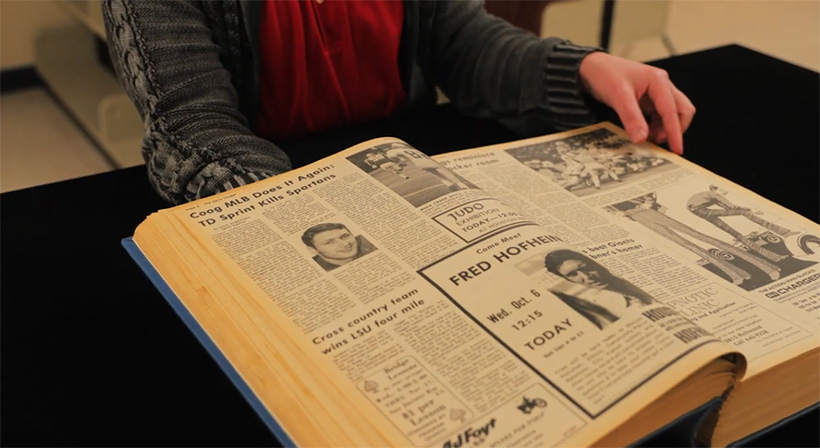
Preservation matters to student success and research productivity because it ensures long-term access to primary sources, which are the foundation of deep learning and scholarship.
This year, we’re featuring the Libraries Preservation General Fund for your Giving Day opportunity. Preservation is an ongoing effort to care for UH Libraries’ collections and ensure they are accessible well into the future. Gifts to the Preservation General Fund provide critical support for protecting materials and housing them in proper environments for long-term care.
Preservation matters to student success and research productivity because it ensures long-term access to primary sources, which are the foundation of deep learning and scholarship. Preservation protects rare, unique, and fragile materials that cannot be replaced. These materials serve as primary evidence for historical, cultural, scientific, and artistic inquiry. Without preservation, students and scholars would lose access to the original artifacts that empower authentic research output. Digitization also broadens access of primary source materials to students and researchers regardless of their location or physical ability to handle fragile items.
Introducing Cougar Collections
UH Libraries is pleased to introduce Cougar Collections, a new video series featuring the rare and unique research collections you can find at UH Special Collections.
In the inaugural episode, Processing Archivist Kevin Kinney shares a few compelling themes of the Red Adair Collection.

The Red Adair Collection is the first to be featured in UH Libraries’ new series, Cougar Collections.
Special collections and archives contain primary source materials, the ingredients of original scholarship. The new Cougar Collections series brings archives alive, surfacing the stories and voices that illuminate our history and inform our future.
Watch Cougar Collections: Red Adair.
Learn more about visiting Special Collections.
Access digitized materials at UH Digital Collections and the Audio/Video Repository.
Rooks Early Career Librarian Fellowship Recipients
Kate Carter, coordinator of Open Education Services, and Natalia Kapacinskas, teaching and learning librarian, have been selected as the 2025 recipients of the Rooks Early Career Librarian Fellowship.
The Rooks Fellowship supports a librarian for three years in the pursuit of career development and research. Use of funds includes, but is not limited to, professional memberships, conference fees, travel costs, research assistance, specialized equipment, technology, or other expenses related to enhancing the recipient’s individual knowledge, research, and career development.
The fellowship is made possible through an endowment established by UH Libraries former dean Dana C. Rooks and her husband, Dr. Charles (Mickey) W. Rooks.
In this video feature, Carter and Kapacinskas talk a bit about their research interests.
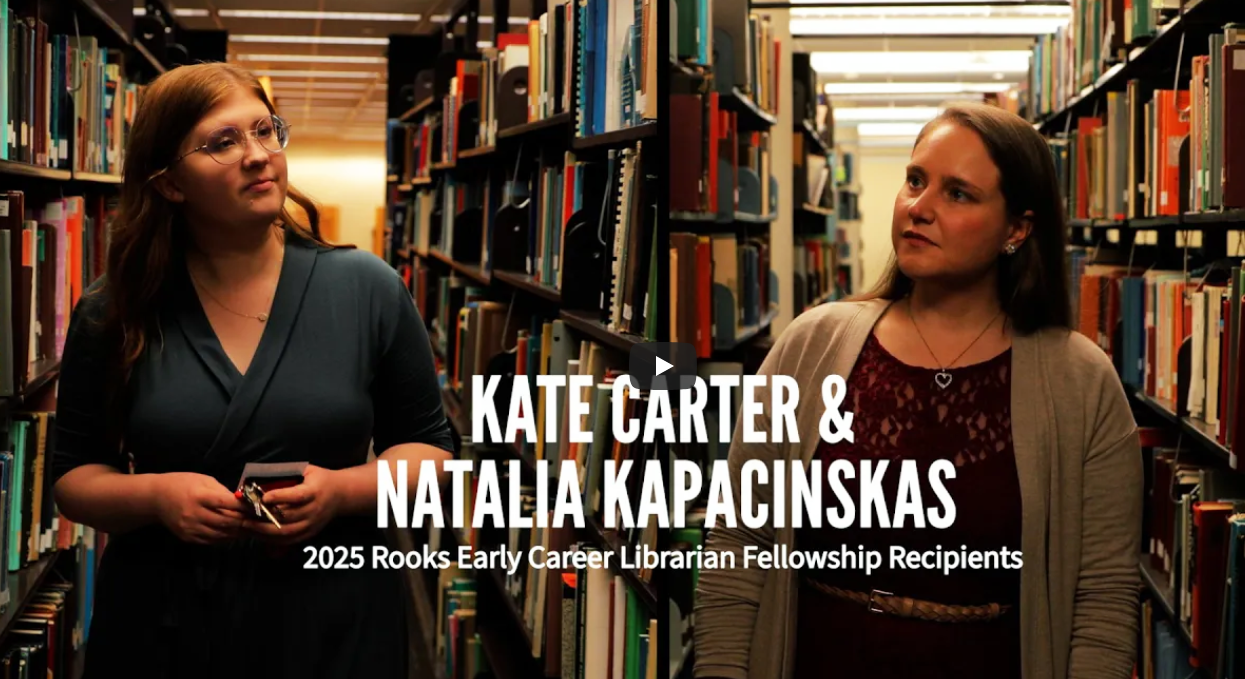
2025 Rooks Early Career Librarian Fellowship Recipients
Remembering Robin Nelson Downes
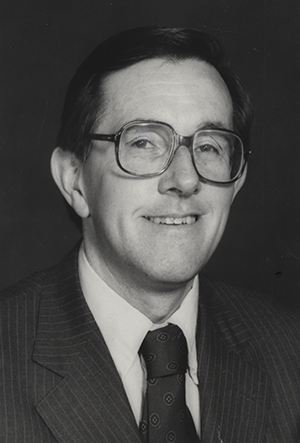
Robin Nelson Downes (1932 – 2025)
Robin Nelson Downes, former Director of University of Houston Libraries, passed away on Wednesday, December 3, 2025, in Houston, Texas. He was 93 years old.
Downes was named Director in 1980, a position he held until his retirement in 1997. Under Downes’ leadership, computer technology became the foundation for library operations, elevating the Libraries as a driver of digital initiatives at the University. He was central to implementing digitization of the card catalog and other academic content. Through innovative applications, Downes expanded the scope and accessibility of library resources and set a strong foundation for the growth of forward-thinking, 21st-century services.
Downes advocated for the electronic publishing of scholarship, and supported the development of an open access journal about end-user computer systems in libraries titled “The Public-Access Computer Systems Review,” established in 1989 at a time when university libraries were among the first publishers of online scholarly journals. He also established a method for applying systems technology to the ways in which the library provided reference services.
Over the course of his leadership, Downes cultivated a professional environment that encouraged creative problem-solving with a focus on stewardship of library resources for students, faculty, and the scholarly community.
“Robin Downes will be remembered as a steady, visionary leader whose influence helped shape the University of Houston Libraries into the essential academic partner it is today,” said Christina H. Gola, Dean of UH Libraries and Elizabeth D. Rockwell Chair. “During his tenure as Director, he not only positioned the Libraries as a critical unit on our campus, but also elevated our engagement at the national level during a period of profound transformation in librarianship. Colleagues who knew him best describe him as interesting, innovative, and exceptionally smart, qualities that guided his work as he embraced automation. His legacy continues to resonate today.”
Downes served in the US Army from 1954 to 1956, and earned a bachelor of arts degree from Florida State University in 1954 and a master’s degree in Library Sciences in 1957. A former librarian at University of Georgia, Downes came to UH from the University of Michigan Library where he was an Associate Director in 1972.
Call for Applications: Open Education Incentive Program
University of Houston Libraries is now accepting applications for the Open Education Incentive (OPEN) Program. The OPEN Program includes a variety of funding opportunities to support engagement with open educational resources (OER) and open educational practices.
Instructors can apply for the following award categories:
- Textbook Affordability Incentive: Instructors can receive funds to replace a required commercial textbook in their course(s) with OER and/or no-cost alternative resources, such as library licensed or freely available resources. Awards in this category range from $1,000 to $5,000.
- Open Educational Practices Incentive: Instructors can receive funds for: 1) creating openly licensed learning objects, 2) replacing a traditional assignment with a renewable assignment, or 3) some combination of the above. Awards in this category range from $500 to $2,000.
OER are teaching and learning resources that are in the public domain or have been licensed in such a way that allows anyone to freely use, modify, and re-purpose them. Open educational practices leverage OER to enhance student learning, and include the creation, use, and reuse of OER, and open pedagogical practices, such as renewable assignments.
The deadline to apply is Friday, March 6, 2026. Interested applicants are encouraged to attend an information session on February 11 to learn about the incentive program and the benefits of open education.
Faculty and instructors may also make an appointment with Open Education Services to discuss implementing OER and the support provided through the incentive program.
ETD in MS Word Accessibility Workshop Series
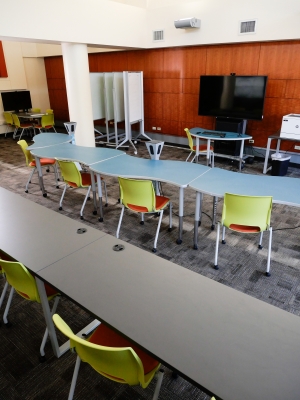
Digital Research Commons
University of Houston Libraries will be hosting six ETD in MS Word Accessibility Training workshops in Spring 2026 at the Digital Research Commons (DRC), located on the second floor of MD Anderson Library (Brown Wing, Room 266-C).
These workshops are open to all UH graduate students and are being offered in response to the U.S. Department of Justice’s Final Rule on Title II of the Americans with Disabilities Act, published in the Federal Register on April 24, 2024. This workshop will teach the best ways to make electronic theses and dissertations (ETDs) created in MS Word accessible to everyone. You will learn how to structure documents so that they can be read by screen readers and meet required accessibility standards.
For each session, the first hour covers the main ideas about accessibility elements and best practices in ETDs. This includes using the styles and headings, adding alt-text and captions to images, making tables and links easy to use, using colors and contrast in the right way, and using Word’s Accessibility Checker.
In the second hour, you will work on your own documents on your own, but you can get help if you need it.
Please register to select your preferred session.
If you have any questions, please contact Xiao Zeng, open publishing librarian.