New Digital Preservation Librarian
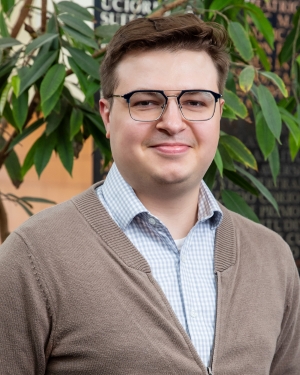
Jeremy Davet is the new digital preservation librarian at UH Libraries.
University of Houston Libraries is pleased to welcome Jeremy Davet as the new digital preservation librarian.
Please describe your role. How does your work align with the student success and research productivity focus of the University?
As the Digital Preservation Librarian for the University of Houston and its libraries, my responsibilities primarily include implementing and periodically amending the UH Libraries Digital Preservation Policy to reflect best practices; managing the Archivematica digital preservation system; and facilitating access to and the use of outmoded digital file types and storage media. When a student’s information-seeking leads them back to the earlier days of personal computing, effective digital preservation will ensure that they can find and use what they are looking for.
Please share a bit about your background and professional interests. How do these inspire and shape your approach to preservation?
Before I started on my current path, my academic background was in cultural anthropology and archaeology. In my experiences navigating divides in language, lived experience, and time, I came to appreciate how much we stand to lose owing to misunderstanding and misremembrance. It was my desire to reveal and preserve the past that took me into libraries and archives – and that’s where you find me today, working to ensure that the archaeologists of tomorrow will be able to uncover the digital artifacts of today. Before joining University of Houston Libraries, I lent my hand to the International Research on Permanent Authentic Records in Electronic Systems (InterPARES), researching the potential benefits and hazards to employing artificial intelligence in memory institutions. More recently, I managed and archived the Artists Documentation Program (ADP), a conservation-focused series of oral histories with artists and their collaborators sponsored by The Menil Collection. In both cases, I was exploring how libraries, archives, and museums can use new technologies to enhance and expand access to their collections, while preserving what makes them authentic and unique.
Taken together, these experiences continue to color my approach to digital preservation: foregrounding the human learning experience, while leveraging emerging technology to improve the quality, quantity, and durability of information.
What are one or two things you’d like faculty, students, and scholars to know about the function/purpose/significance of digital preservation?
Most importantly, that digital preservation is your concern too! Ancient history is not so different from the modern day, insofar as we can only collectively remember what gets recorded. Make sure your work makes it to the next generations by taking simple steps like limiting the length of filenames, regularly backing up your work, and describing your files with metadata. Ensure that you’re adequately safeguarding your files against potential hazards, like hardware failure or natural disasters, and that you’re saving your most important documents in stable, portable formats like PDF.